Double Cab Electric Truck Payload: Crew and Cargo Checks
A double cab electric truck must accommodate the working crew and its cargo together. Before ordering, ask for a load assessment of the exact vehicle configuration, including occupants, tools, fitted equipment and the heaviest expected delivery. A headline payload figure does not, by itself, confirm how much freight can be carried with every seat occupied.
This guide gives distributors and fleet buyers a practical way to prepare that assessment. It focuses on crew-and-cargo operations, such as maintenance teams and deliveries requiring several handlers, rather than comparing battery sizes or repeating a complete vehicle specification sheet.
1. Define what “payload” includes in the proposal
Ask the supplier to explain the basis of every load figure. Is it a suggested model-class payload, an allowance for the finished vehicle, or a cargo figure calculated for a specified number of occupants? Which body and accessories were included?
As a general loading principle, Ford’s owner-manual explanation of payload includes passengers and cargo and distinguishes weight limits from available space. This explains the terminology; it does not establish the load limits of a KAMA vehicle. Use the documentation for the exact KAMA configuration and destination market.
Do not deduct occupants or equipment twice if they are already included in the stated reference condition. Equally, do not treat a cargo allowance calculated for a driver-only trip as an allowance for a full working crew.
2. Build a crew-and-cargo worksheet
Use the same worksheet for every candidate vehicle. Mark each item as included in the vehicle’s stated mass or additional to it, then ask the supplier to confirm the interpretation.
| Item to record | What the buyer should provide | What needs confirmation |
|---|---|---|
| Working crew | Expected occupants for each type of trip, including the driver | Approved seating layout and occupant-mass basis |
| Permanent equipment | Tool lockers, racks, body protection and other installed additions | Which items are already included in the finished-vehicle mass |
| Portable tools and supplies | Equipment, spare parts and consumables normally carried | Their mass and storage location during travel |
| Delivery cargo | Heaviest expected shipment, including packaging and handling aids carried on the truck | Remaining cargo allowance and the proposed load arrangement |
| Return load | Collected goods, used parts or empty containers returning to the depot | Whether the return trip changes the limiting load case |
Record both normal and maximum working conditions. An average delivery weight can hide the one trip that determines whether a vehicle suits the operation.
3. Review three real operating cases
Crew departure: the complete team leaves with its regular tools and supplies.
Largest delivery: the vehicle carries the heaviest planned shipment and the people required to unload it.
Return or collection: the truck brings back equipment, collected goods or packaging that was absent at departure.
For each case, list the occupants, additional equipment, cargo mass and cargo position. Ask for the completed-vehicle and axle-load assessment to match these cases. Staying within an overall mass limit alone does not confirm that every axle or tyre limit is satisfied.
4. Check usable space separately from weight
A load can fit within the bed dimensions and still be unsuitable by mass or distribution. Conversely, lightweight goods may fill the available space before the weight allowance is reached. Provide package dimensions, loading method and the position of concentrated loads.
For an open-bed vehicle, also identify weather protection and load-restraint needs. If the solution adds equipment or changes the body, include that change in the configuration review rather than treating it as an afterthought.
5. EV1S example: a starting point, not a full-crew promise
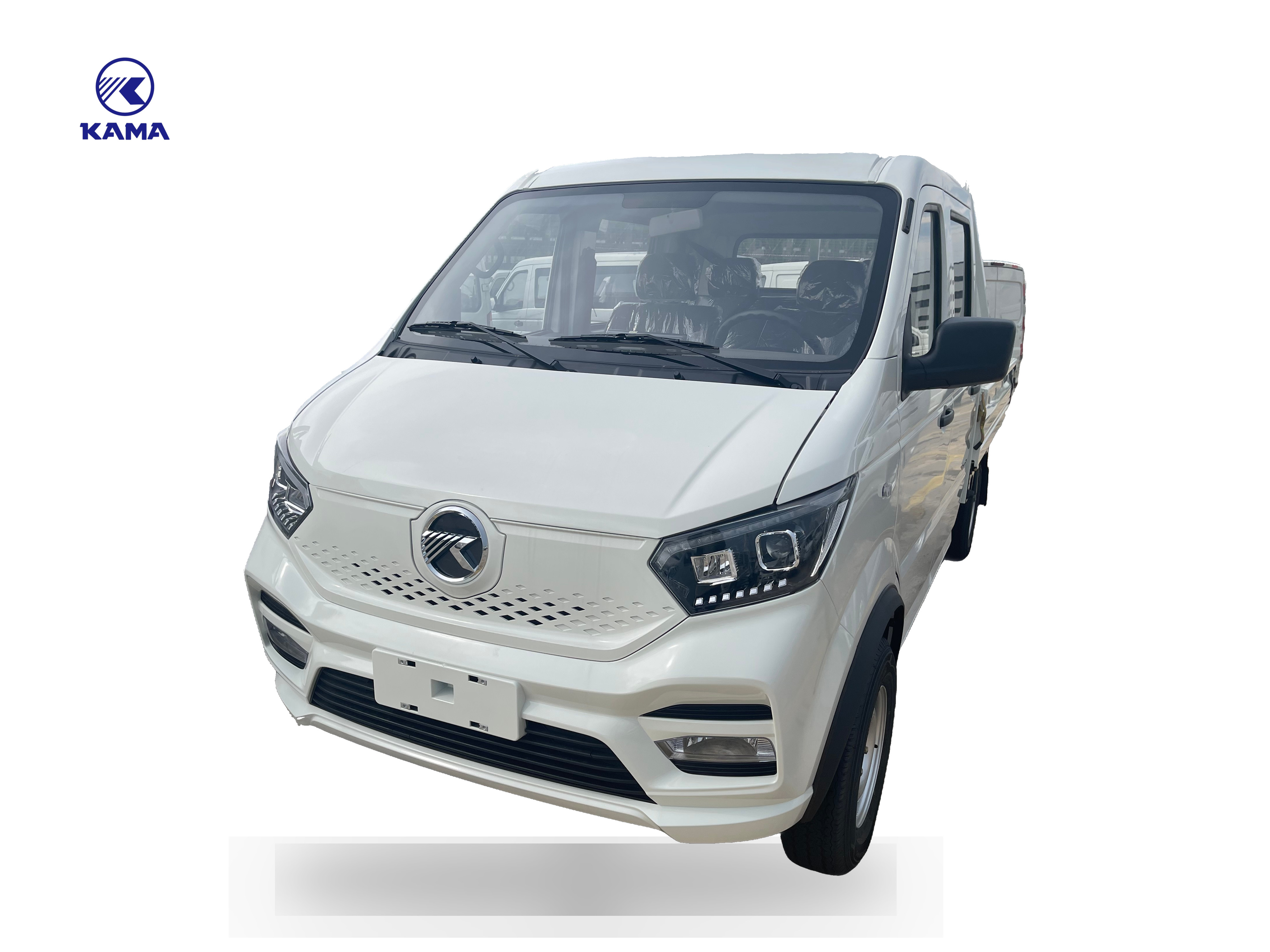
The KAMA EV1S double cab electric cargo truck reference specification lists a double-cab LHD layout, a suggested payload of 1.5 tonnes and a 51.46 kWh Gotion LFP battery. The listed cargo-bed dimensions are 2,350 × 1,625 × 360 mm.
Those figures help identify the configuration being discussed. They do not establish the available freight allowance with your particular crew, installed equipment and destination requirements. Request the final seating arrangement and loading assessment before treating the model as a match for your operation.
The worksheet should stay attached to the selected configuration version. If the body, battery configuration or equipment changes, ask whether the loading assessment needs revision.
Before confirming the order
Keep a single agreed record covering the vehicle version, reference mass condition, seating layout, fitted equipment, permitted vehicle and axle loads, and the operating cases reviewed. Where appropriate, agree how the completed vehicle and its loads will be verified before it enters service.
For broader comparisons, see our electric light truck specifications guide. If your project requires a different body, use the body-installation review guide alongside the crew-and-cargo worksheet.
Frequently asked questions
Does “double cab” confirm a particular seat count?
No. Confirm the approved seating layout for the selected version; the cab description alone is not a seating specification.
Can battery capacity tell me the loaded driving range?
No. Ask for a route assessment using the intended load, distance, gradients, operating conditions and charging arrangements. Battery capacity alone does not establish a working-day range.
What should I send with an enquiry?
Send your destination country, required crew size, heaviest cargo and its dimensions, regular equipment list and expected order quantity. Include a loading sketch if the goods are concentrated in one area. Contact KAMA for a configuration review using that information.