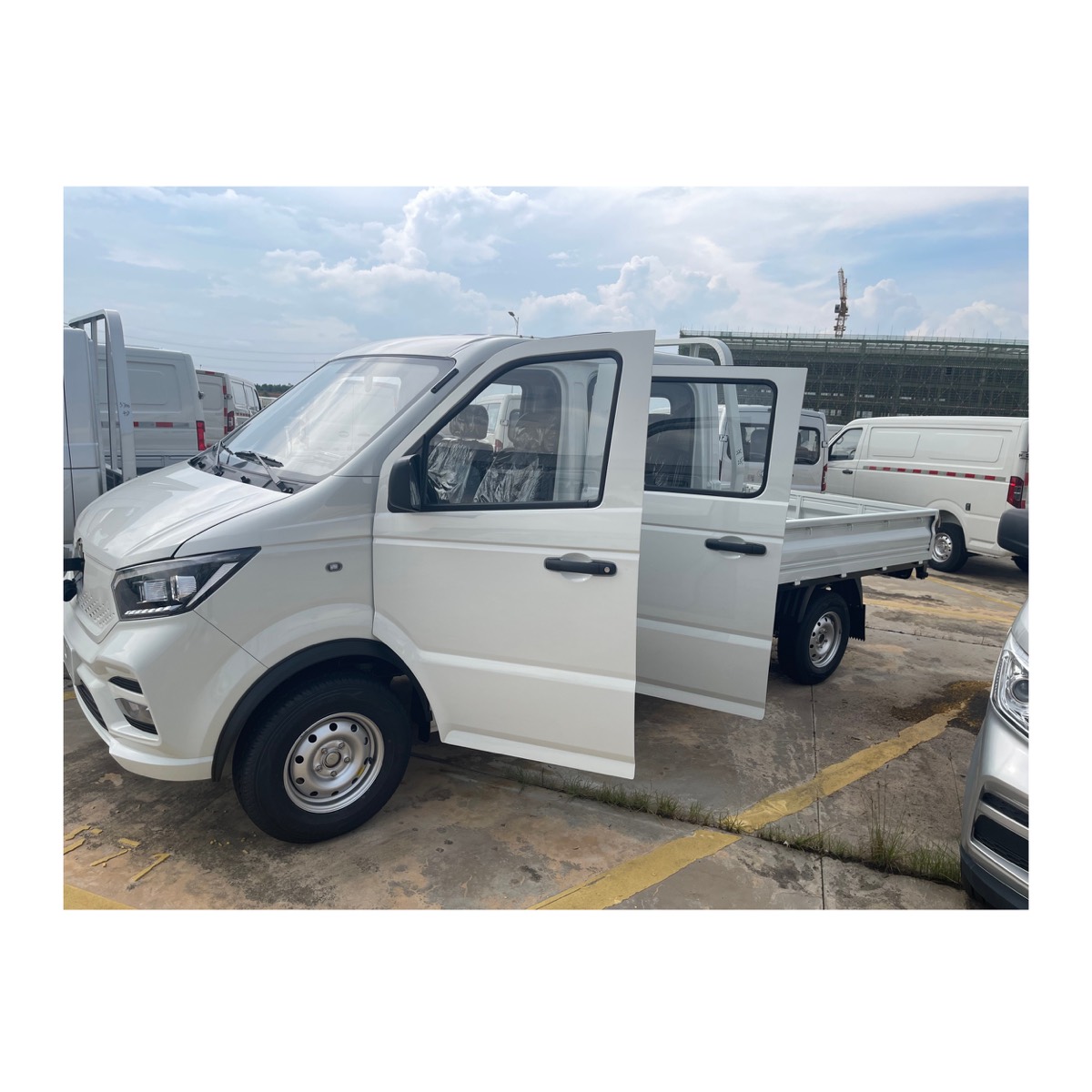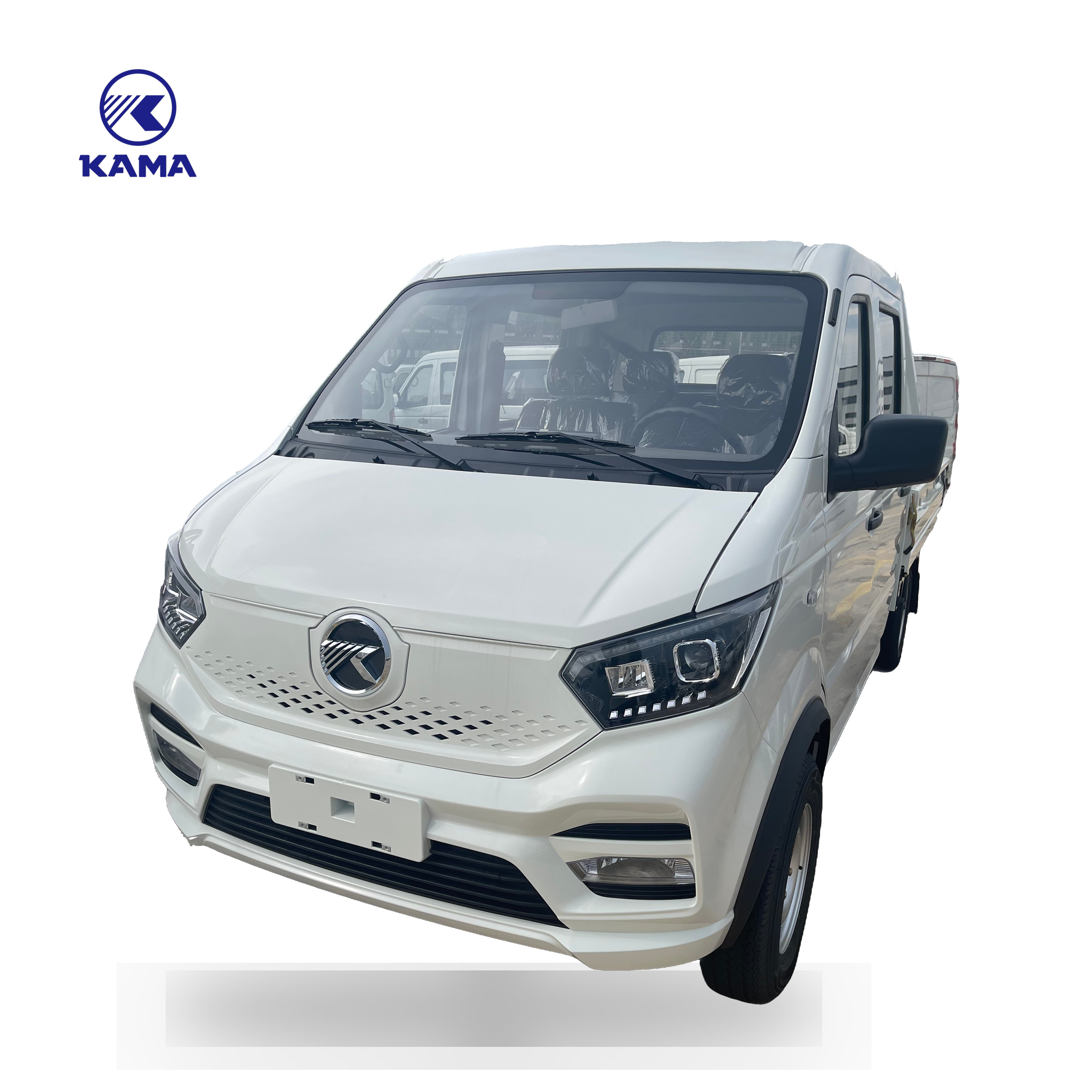
KAMA EV1S Double Cab Electric Cargo Truck
Double cab, LHD
Gotion 51.46 kWh LFP battery
2,350 mm cargo-bed length
35/70 kW rated/peak motor power
Move your team, tools and cargo together. The KAMA EV1S combines a double cab with an open cargo bed and a 51.46 kWh Gotion LFP battery, giving distributors an electric light truck to assess for crew-based delivery and service work.
For customers in Africa and South America, the buying decision starts with the job: who travels in the cab, what goes on the bed, and where the vehicle can charge. The EV1S reference configuration is left-hand drive, with a 35 kW rated / 70 kW peak motor and a suggested payload of 1.5 tonnes.
EV1S Configuration at a Glance
| Item | Reference specification |
|---|---|
| Powertrain | Battery electric |
| Cab and steering | Double cab, left-hand drive |
| Suggested payload | 1.5 tonnes* |
| Battery | Gotion lithium iron phosphate (LFP), 51.46 kWh |
| Motor power | 35 kW rated / 70 kW peak |
| Overall dimensions (L × W × H) | 5,460 × 1,715 × 2,100 mm |
| Wheelbase | 3,450 mm |
| Cargo-bed dimensions (L × W × H) | 2,350 × 1,625 × 360 mm |
| Listed equipment | ABS, power steering, air conditioning, power windows and central locking |
*Suggested payload is a configuration reference, not a guaranteed legal cargo allowance. Confirm the final vehicle’s permitted load, axle limits and allowance for occupants and fitted equipment.
One Vehicle for Crew and Cargo Tasks
The double cab brings people into the cargo-truck selection process. Potential applications include:
Utility and maintenance work: carry a service team alongside secured tools, spare parts and worksite supplies.
Local business deliveries: assess the open bed for hardware, packaged goods and deliveries requiring a handling team.
Campus and industrial-park logistics: evaluate recurring transfers of personnel and materials between facilities.
Match each application to the final seating layout, load limits and operating conditions. For rain-sensitive goods, assess suitable protection separately; an open cargo bed does not provide enclosed-van weather protection.
Check the Load Space and Access Route
Use the 2,350 × 1,625 mm bed footprint to compare your customers’ usual cargo dimensions and loading arrangements. Check load distribution and securing points before planning a full working load.
The truck’s 1,715 mm overall width provides a useful starting point for checking gates and delivery access. Allow for mirrors, manoeuvring space and local restrictions; vehicle width alone does not establish whether a narrow route is suitable.
Build a Charging Plan Around the Working Day
Routes that return to a known parking location offer a practical starting point for electric-fleet planning. Assess daily distance, gradients, load, traffic, temperature and air-conditioning use against the proposed vehicle configuration.
Identify the available charging window and electrical supply, then verify the vehicle’s charging interface and charger compatibility. The 51.46 kWh battery capacity alone does not establish route range or charging time. For a larger fleet, also check how charging multiple vehicles will fit the depot’s power capacity and operating schedule.
Distributor Questions
Can the EV1S carry a crew and 1.5 tonnes of cargo together?
Do not assume both allowances are available simultaneously. Confirm the final seating configuration, occupant load, equipment and permitted vehicle and axle weights before assigning cargo.
Can I request a right-hand-drive version?
The reference specification is LHD. State any RHD requirement in your enquiry so availability and the relevant configuration can be checked separately.
What should I check for my destination market?
Confirm registration requirements, applicable vehicle documentation, charging compatibility and service arrangements for the proposed configuration before ordering.
Discuss Your EV1S Fleet Requirements
Send KAMA your destination country, intended use, quantity and LHD/RHD requirement, together with crew size, typical cargo weight and dimensions, daily route distance and charging arrangements. These details provide a clear starting point for selecting and reviewing an EV1S configuration for your customers.
Related pages
Distributors and fleet buyers can request a configuration review by sending the destination country, required payload or crew requirement, daily distance, and charging conditions to [email protected] or WhatsApp +86 136 0399 6917. Availability and the final specification should be confirmed before an order is placed.