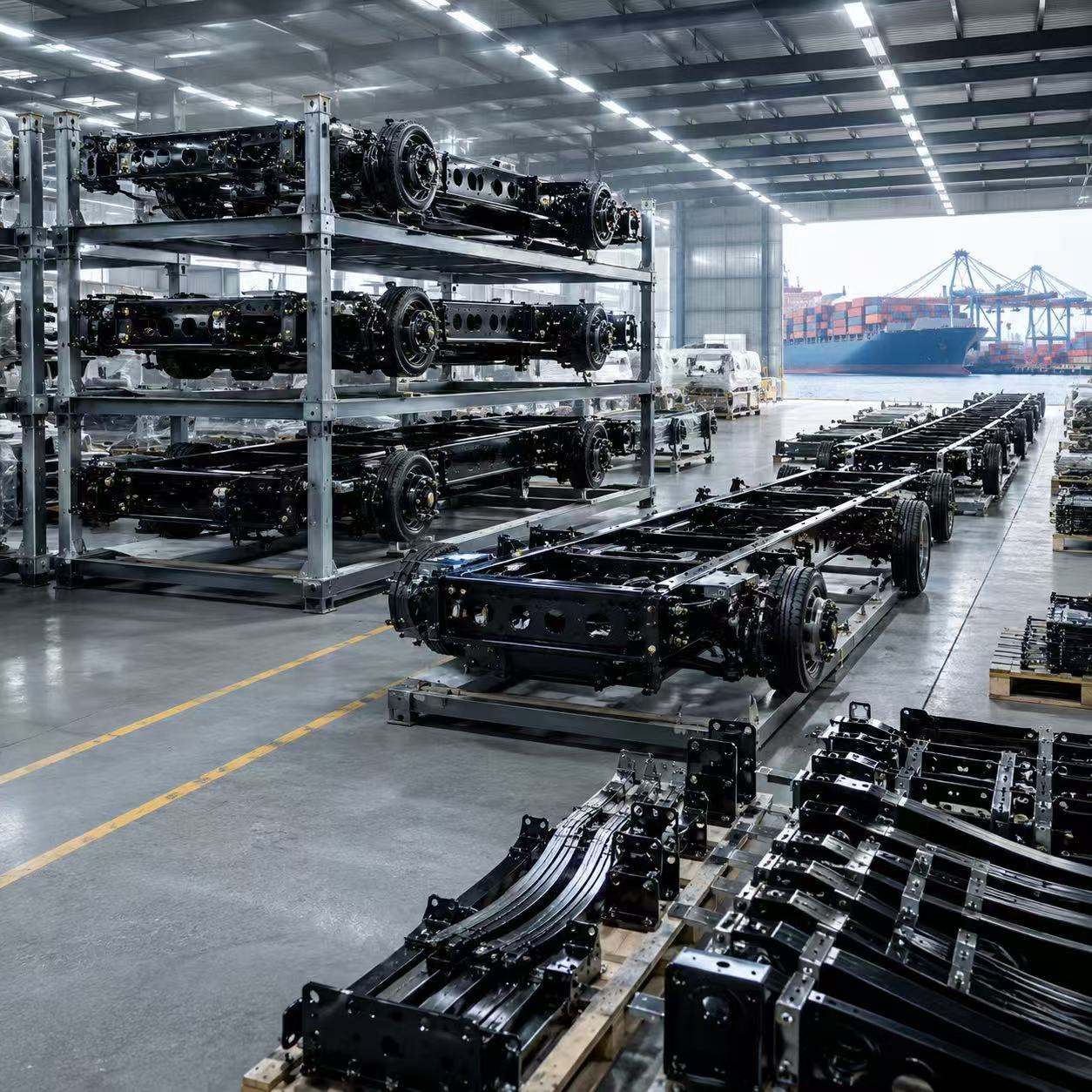
Electric Truck Chassis for Body Builders: What to Confirm Before Body Installation
Purchasing an electric truck chassis for local body installation gives importers and body builders the opportunity to develop vehicles around specific transport needs. An enclosed delivery box, refrigerated body or service body each brings different requirements for space, weight, mounting and electrical equipment.
Before selecting a chassis, the buyer, body builder and vehicle manufacturer should agree on the proposed complete vehicle configuration. The following technical points provide a practical starting point for that discussion.
1. Start with the Chassis Drawing and Intended Application
A model name and wheelbase are useful starting points, but body installation requires more detailed information. Request the available chassis drawing for the exact vehicle version being considered.
The technical review should cover:
Chassis frame dimensions and available body installation space.
Distance between the cab and the proposed body.
Rear overhang and intended body length.
Positions of the battery, charging port and other chassis components.
Proposed mounting locations.
Clearance required for moving components and maintenance access.
Share the intended cargo, loading method and operating environment at the same time. A truck carrying bulky parcels may need a different body layout from one transporting dense materials or temperature-controlled goods.
Drawings should identify whether dimensions refer to the inside or outside of the cargo body. This helps prevent misunderstandings about usable cargo space and the finished vehicle’s overall size.
2. Evaluate Payload After Including the Body and Equipment
The weight of the completed body must be included when evaluating the vehicle’s cargo-carrying capability. Refrigeration equipment, insulation, a tail lift, shelving and other accessories also contribute to the finished vehicle’s weight.
Ask the manufacturer to review a weight estimate that identifies:
The exact chassis-cab configuration and its weight basis.
The proposed body weight.
Permanently installed equipment and accessories.
Occupants and other operating loads.
The intended cargo weight and its position.
Confirm both the permitted gross vehicle weight and the applicable axle limits. Staying within the total weight limit alone does not establish that the load is appropriately distributed.
For example, a heavy component positioned near the rear of the body should be included in the axle-load assessment. The final review should consider the proposed loading pattern as well as the vehicle’s overall weight.
3. Confirm the Mounting Arrangement Before Fabrication
Body dimensions alone do not establish that a body can be installed on a particular chassis. The mounting arrangement must also be suitable for the exact vehicle platform.
The body builder should submit the proposed mounting design, including any subframe, brackets and attachment locations, for technical review. Obtain the manufacturer’s applicable body-building instructions before carrying out fabrication or chassis modifications.
Requests involving drilling, welding, component relocation or changes to the chassis structure require specific review. Do not assume that a mounting method used on another truck is suitable for the selected electric chassis.
A clearly identified drawing revision helps all parties work from the same design when the project moves into production.
4. Preserve Access to the Battery and Service Components
The body layout should allow the vehicle to be charged, inspected and serviced after installation.
During the design review, ask the manufacturer to identify the access and clearance requirements around the battery system, charging inlet, electrical components and other service points.
Questions to resolve include:
Can the charging connector be inserted and removed normally?
Does the body obstruct access to inspection or service points?
Is the required space available for component removal?
Could body brackets or equipment interfere with cables or other chassis components?
Does the proposed installation affect any cooling or ventilation provisions?
These requirements should be resolved on the drawings before the body is built. Access that appears adequate on an unfinished chassis may become restricted once panels, storage compartments and auxiliary equipment are installed.
5. Define Electrical Requirements for Auxiliary Equipment
A refrigerated body, powered tail lift or other electrical accessory needs an agreed power-supply arrangement.
Provide the equipment specifications to the factory, including operating voltage, rated power, peak demand and expected daily operating time. Ask which interfaces are available and whether the proposed equipment is compatible with the selected vehicle configuration.
Do not assume that a connection to the traction battery is available or approved. Power supply, protection, control and installation responsibilities should be confirmed for the project.
For equipment used throughout the working day, also request an assessment of its effect on the vehicle’s energy budget. Any operating-range estimate should reflect the proposed body, load, route and accessory use.
6. Prepare a Technical Package for Review
A complete enquiry helps the manufacturer assess the project more efficiently. Before requesting a final chassis proposal, prepare:
Destination country and required steering position.
Target chassis model and order quantity.
Intended application and cargo type.
Body drawings, dimensions and estimated weight.
Expected payload and loading arrangement.
Auxiliary equipment specifications.
Daily distance, road conditions and charging arrangements.
Responsibilities for body installation and finished-vehicle verification.
Agree on the required checks and supporting records before the completed vehicle enters service. Chassis supply and approval of a proposed body installation should be treated as separate confirmation steps.
Discuss Your Electric Truck Chassis Project with KAMA
KAMA supports chassis supply enquiries and configuration discussions for overseas commercial vehicle projects. Model availability, body compatibility and the scope of technical support depend on the selected chassis and project requirements.
Send your body drawing, estimated equipment weight, intended payload, destination country and order quantity to the KAMA team. These details provide the basis for reviewing a suitable chassis configuration and identifying the technical points that need confirmation before production.