Inside KAMA Factory: How Commercial Vehicles Are Built for Global Export Markets
Inside KAMA Factory: How Commercial Vehicles Are Built for Global Export Markets
For overseas distributors and fleet buyers, choosing a commercial vehicle involves more than comparing specifications and FOB prices.
Behind every truck, van or electric commercial vehicle is a manufacturing system that determines whether the vehicle can be produced consistently, inspected correctly and adapted for different market requirements.
This is particularly important for international projects.
A vehicle ordered for urban logistics in Africa may require different specifications from one used by a fleet operator in South America or a distributor in Southeast Asia.
The factory therefore needs to control more than final assembly.
It needs to connect engineering, production, quality inspection, configuration management, documentation and export preparation.
KAMA Automobile has developed an integrated commercial vehicle manufacturing system covering mini trucks, light trucks, electric commercial vehicles, vans, minibuses and specialized vehicle solutions.
This article looks inside that manufacturing system and explains how factory capability affects an overseas vehicle project.
1. Commercial Vehicle Manufacturing Starts Before the Assembly Line
A commercial vehicle is not simply a collection of components.
Before production begins, the vehicle specification needs to be clearly defined.
For an export project, this can include:
Vehicle model
Engine or electric powertrain
Battery capacity
Left-hand or right-hand drive
Gross vehicle weight
Payload requirement
Cargo body configuration
Passenger seating
Charging interface
Tire specification
Air conditioning
Safety equipment
Vehicle labels
Destination-market requirements
This configuration definition is particularly important when several vehicles are being produced for one fleet or distributor.
A specification error identified before production may be relatively easy to correct.
The same error discovered after vehicles have been completed—or shipped—can become expensive.
For this reason, factory manufacturing capability should begin with configuration control, not only physical production.
2. KAMA's Integrated Vehicle Production System
KAMA operates commercial vehicle production facilities supporting multiple vehicle categories.
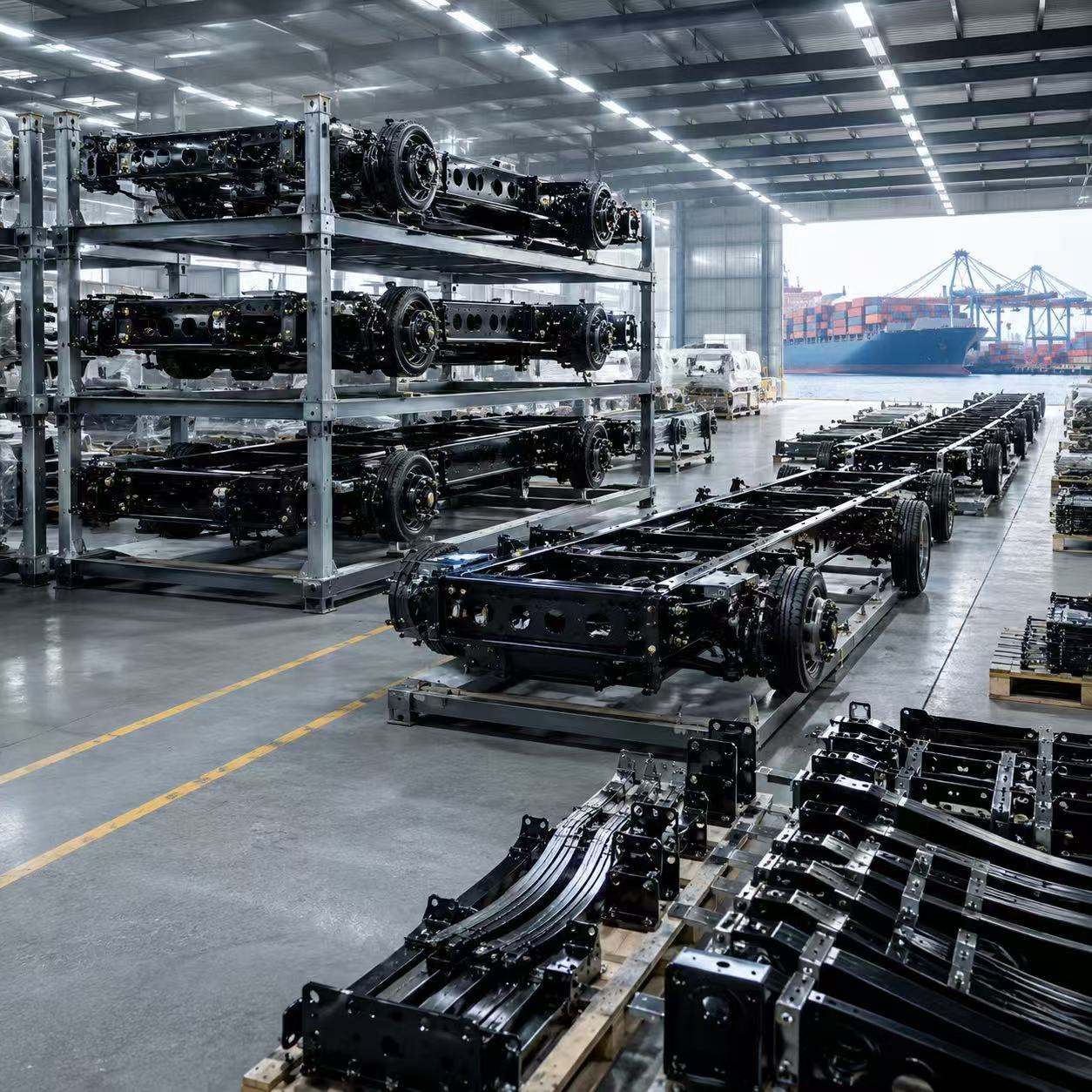
According to KAMA's current corporate information, the manufacturing system includes advanced:
Welding lines
Painting facilities
Vehicle assembly lines
Production inspection processes
KAMA's current corporate About page states that its manufacturing facilities support annual vehicle production capacity of up to 200,000 units.
For overseas customers, large-scale production capacity matters for several reasons.
It can support:
Multi-Model Orders
A distributor may require several product categories rather than one vehicle.
For example:
Mini truck
Light truck
Cargo van
Passenger van
Electric truck
A flexible manufacturing system makes mixed product cooperation easier to organize.
Repeat Orders
For distributors, the first shipment is only the beginning.
Future orders require consistent vehicle specifications and stable production capability.
Fleet Projects
Large fleet projects require coordinated production schedules, inspection and documentation.
Production capacity therefore needs to be evaluated together with production management.
3. Digital Manufacturing Is Becoming More Important
Modern vehicle manufacturing increasingly depends on digital production management.
In June 2026, KAMA Automobile's TSP Digital Navigation Smart Factory was included in the first batch of basic-level smart factories recognized by SINOMACH Group.
The project focuses on areas including digital production management, process control, lean production and integrated data management.
For an overseas buyer, "smart factory" should not simply be treated as a marketing term.
Its practical value comes from better control over manufacturing information.
Digital production systems can help improve:
Production scheduling
Configuration traceability
Process consistency
Vehicle information management
Quality tracking
Coordination between production stages
Response to configuration changes
This becomes particularly useful when a project contains several vehicle versions.
For example, one shipment may contain vehicles with different:
Battery capacities
Cargo bodies
Charging interfaces
Seating arrangements
Market-specific configurations
The ability to accurately manage these differences is an important part of export manufacturing.
4. A Product Platform for Different Commercial Applications
KAMA's manufacturing capability covers several commercial vehicle categories rather than a single product.
The company's export-oriented product portfolio includes:
EV Mini Trucks
Compact electric trucks can serve applications such as:
Urban distribution
Retail delivery
Agricultural transport
Small business logistics
Industrial park transportation
KAMA's current export product range includes platforms such as the EV1, EV2 and EV3 series.
For example, the current EV3 configuration listed by KAMA uses a 53.58 kWh CATL LFP battery and is positioned as a compact electric cargo truck for overseas markets.
Electric Light Trucks
Larger electric truck platforms are available for higher payload and fleet applications.
The current KAMA portfolio includes models such as EM31 and EM61.
The EM31 is positioned as a 2.5-ton-class electric light truck, while the larger EM61 is designed for heavier logistics applications.
Applications can include:
Urban logistics
Distribution fleets
Box-body delivery
Refrigerated transport
Industrial logistics
Municipal operations
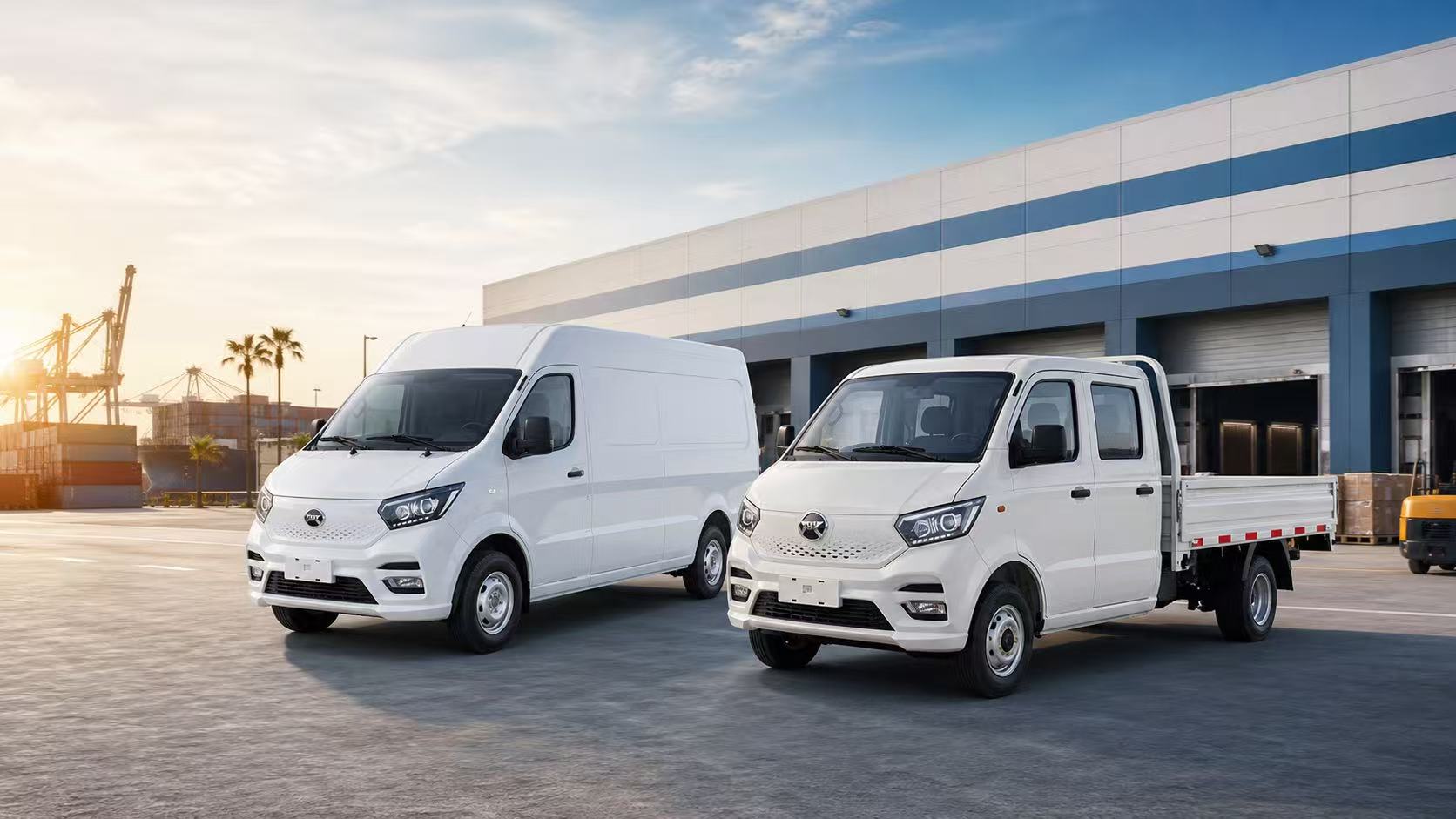
Cargo and Passenger Vans
Van platforms are important for both goods and passenger transportation.
Typical applications include:
Last-mile delivery
Service fleets
Employee transportation
Hotel shuttle operations
Passenger routes
Commercial cargo transport
Different applications can require different battery, seating, air-conditioning and interior configurations.
Fuel Commercial Vehicles
Electric vehicles are only one part of the commercial vehicle market.
Many developing markets continue to require gasoline, diesel or CNG products depending on fuel infrastructure, operating distance and purchasing cost.
A diversified manufacturing platform allows distributors to build a product portfolio according to local market conditions rather than relying on one powertrain.
KAMA's existing product structure covers mini trucks, light trucks, vans, EV commercial vehicles and other commercial transport solutions.
5. Engineering for Overseas Operating Conditions
Export commercial vehicles are often used under operating conditions that differ significantly from China's domestic market.
The destination environment can include:
High ambient temperature
Dust
Rough road surfaces
High daily mileage
Heavy payload
Limited service infrastructure
Different fuel quality
Different charging standards
Vehicle selection should therefore begin with the operating scenario.
For example, an electric truck used in a city fleet may operate on a predictable 100–150 km daily route.
Another vehicle may need to travel regional routes with higher payload and limited charging access.
These two applications may require different battery and vehicle configurations.
KAMA's export product development framework considers areas including chassis, suspension, powertrain, body configuration, charging requirements and market-specific vehicle adaptations.
This is why overseas buyers should provide operating information before finalizing a configuration.
Useful information includes:
Daily mileage
Payload
Road condition
Temperature
Cargo type
Charging environment
Destination country
The correct specification should be based on the application, not simply the largest battery or highest advertised range.
6. EV Technology Is More Than Battery Capacity
Electric commercial vehicle buyers often begin their comparison with one number:
kWh.
Battery capacity is important, but it does not independently determine whether a vehicle is suitable.
An electric commercial vehicle is a complete technical system.
Important components include:
Battery pack
Battery management system
Motor
Motor controller
Vehicle controller
Thermal management
Charging system
High-voltage wiring
Low-voltage electrical architecture
Braking system
These systems need to work together.
For example, two electric trucks with similar battery capacity may still have different:
Payload
Vehicle weight
Motor output
Energy consumption
Charging speed
Thermal performance
Operating range
This is why professional procurement should compare the entire vehicle specification rather than battery size alone.
7. Battery and Component Supplier Selection
Battery quality is particularly important in electric commercial vehicles because the battery represents one of the most valuable vehicle components.
Different KAMA platforms may use battery systems from established Chinese suppliers including brands such as:
CATL
Gotion
EVE
depending on the model and final vehicle configuration.
For example, KAMA's current EV2 product information lists a 51.46 kWh Gotion LFP battery, while EV3 uses a 53.58 kWh CATL LFP configuration.
However, overseas buyers should not select a battery only by brand.
They should also confirm:
Capacity
Chemistry
Voltage
Cooling method
Pack identification
Charging interface
Vehicle compatibility
Before shipment, battery information should also match the approved vehicle specification and relevant documentation.
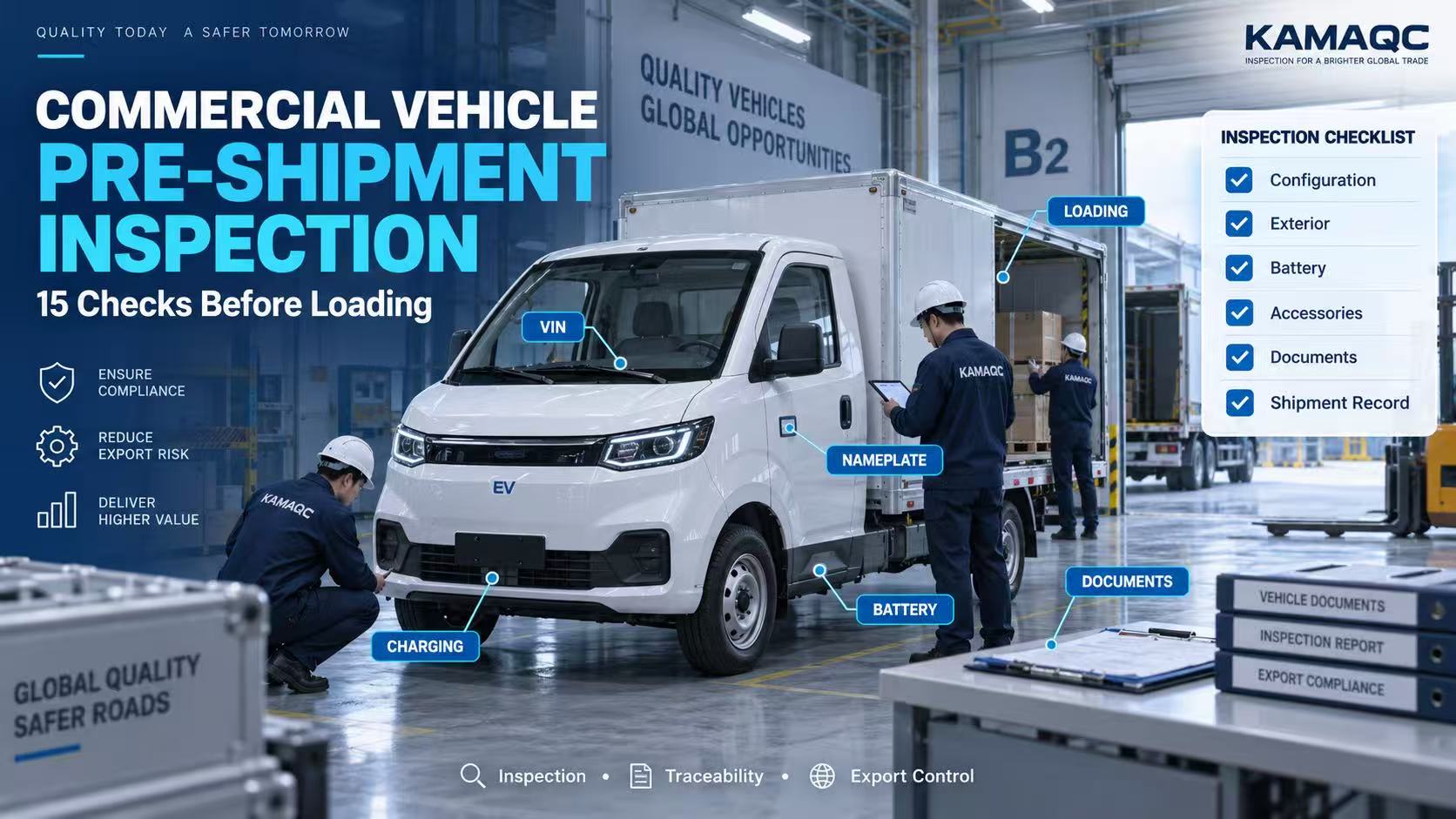
This is one reason kamaqc.cn has placed increasing emphasis on pre-shipment battery verification and VIN-based inspection.
8. Quality Control Must Connect the Vehicle to Its Records
Quality inspection is not simply checking whether the truck starts and drives.
For export projects, the physical vehicle should match the commercial and technical records.
Important verification points may include:
Vehicle Identity
VIN
Model
Production information
Vehicle Configuration
Engine or battery
Motor
Steering configuration
Tires
Cargo body
Seating
Exterior Condition
Paint
Body panels
Glass
Lighting
Mirrors
Vehicle Functions
Brakes
Steering
Instrument cluster
Air conditioning
Electrical systems
EV-Specific Checks
Battery label
Battery condition
Charging port
High-voltage connections
Dashboard information
For batch orders, inspection results should ideally be traceable to individual VINs.
This helps reduce confusion when several configurations are shipped together.
9. From Production Completion to Export PDI
A vehicle leaving the assembly line is not automatically ready for international shipment.
Export preparation normally requires another verification stage.
A structured export PDI can include:
Confirming VIN
Confirming vehicle configuration
Checking exterior condition
Checking electrical functions
Confirming battery information for EVs
Checking charging interface
Checking cargo or passenger configuration
Taking vehicle photos
Preparing vehicle records
Matching physical vehicles with shipping documentation
This process creates an important connection:
Order → Production → Vehicle → VIN → Inspection → Export Documents
For international vehicle projects, consistency across these stages is essential.
10. Export Documentation Is Part of Manufacturing Quality
A perfectly manufactured vehicle can still experience import problems if its documentation is inconsistent.
Before shipment, the vehicle information may need to match documents such as:
Commercial Invoice
Packing List
Bill of Lading
Certificate of Origin
Vehicle technical documents
VIN list
Applicable certificates
The model description, vehicle quantity, VIN and commercial information should remain consistent across the shipment.
This is particularly important for multi-model orders.
kamaqc.cn already maintains a dedicated export document verification guide because physical vehicle quality and documentation quality should be treated as part of the same export-control process.
11. Production Capacity Should Be Measured by Project Execution, Not Only Numbers
Annual manufacturing capacity is useful information, but overseas buyers should look beyond the headline number.
A better question is:
Can the factory convert production capacity into a controlled project?
A commercial vehicle project may require:
Several models
Different battery configurations
Different cargo bodies
Different colors
Market-specific requirements
Spare parts
Technical documents
Staged delivery
Managing this complexity requires production coordination.
This is why vehicle manufacturing capacity should be evaluated across three dimensions:
Physical Capacity
Can the factory produce the required number of vehicles?
Engineering Capacity
Can the factory evaluate and manage required configurations?
Project Management Capacity
Can production, inspection, documentation and shipment remain coordinated?
For distributors and fleet operators, the third point is often the most important.
12. A 1,000-Unit Battery-Swap Vehicle Project Shows Platform Scalability
One recent example of KAMA's project capability is the large-scale battery-swapping commercial vehicle agreement signed in August 2026.
On August 24, Qingdao United New Energy and SINOMACH Shandong KAMA Automobile Manufacturing Co., Ltd. signed a procurement agreement covering 1,000 battery-swapping commercial vehicles.
The program covers three vehicle categories:
Light trucks
Mini trucks
Mid-size vans
The first 100 vehicles are scheduled within the initial delivery phase, with additional vehicles to be supplied according to market demand.
Although this is a domestic new-energy project rather than an export shipment, it provides a useful example of an important manufacturing capability:
one technical architecture being applied across several commercial vehicle platforms at project scale.
This type of platform integration is relevant to overseas fleet and distributor projects as well.
Large vehicle programs require not only product availability but coordination across engineering, production and delivery.
13. Export Experience Adds Another Layer of Factory Capability
Producing a commercial vehicle for the domestic market and preparing one for international delivery are not exactly the same process.
Export projects introduce additional requirements.
These can include:
Market-specific configuration
LHD or RHD
Charging-standard discussion
Export packaging
Spare parts
Documentation
Shipping coordination
Local assembly preparation
SKD or CKD feasibility
KAMA's corporate information lists export markets including Nigeria, Egypt, Iran, Sri Lanka, Pakistan, Algeria, South Africa, the United Kingdom and France.
The company's broader export strategy focuses particularly on commercial vehicle customers including:
Distributors
Importers
Fleet operators
Logistics companies
Construction companies
Passenger transport operators
Local assembly partners
These customer types often require very different project structures.
14. SKD and CKD Require Manufacturing Support
For some markets, the long-term business model may extend beyond complete vehicle imports.
SKD or CKD cooperation can become relevant when a distributor or industrial partner wants to develop local assembly.
This requires much more technical involvement than shipping a finished vehicle.
Potential areas include:
Knock-down definition
Component identification
Packaging
Assembly sequence
Technical documentation
Quality control
Local inspection
Training
Spare parts
Production planning
KAMA supports discussion of SKD and CKD commercial vehicle programs for suitable projects.
However, the appropriate model depends on local regulations, customer capability, project volume and final factory evaluation.
15. Why Factory Capability Matters to Overseas Distributors
For a distributor, the first vehicle order may be relatively small.
But a successful market requires continuity.
The distributor needs confidence that:
The same model can continue to be supplied
Vehicle specifications remain controlled
Spare parts can be identified
Technical questions can be answered
Larger orders can be produced
Product configurations can evolve with market demand
This is where a vehicle factory relationship becomes different from a one-time sourcing transaction.
A strong manufacturing partner should support the entire product lifecycle:
Model Selection → Configuration → Production → Inspection → Export → After-Sales → Repeat Order
KAMA Commercial Vehicle Manufacturing for Global Projects
KAMA's manufacturing system combines commercial vehicle production, electric vehicle technology, multi-platform product development, digital manufacturing and export project support.
Its product portfolio covers applications ranging from compact urban delivery vehicles to larger electric trucks, passenger vehicles and special-purpose solutions.
For overseas distributors and fleet operators, however, the most important question is not simply how many vehicles a factory can produce.
It is whether the manufacturer can produce the correct vehicle repeatedly and consistently for the intended market.
That requires engineering, manufacturing, inspection and export execution to operate as one system.
Planning a Commercial Vehicle Project?
Overseas distributors, importers, fleet operators and local assembly partners can contact KAMA to discuss commercial vehicle projects.
For an initial factory evaluation, please provide:
Country / Market:
Vehicle Type:
Target Model:
Quantity:
LHD or RHD:
Main Application:
Payload / Passenger Requirement:
EV / Gasoline / Diesel / CNG:
Destination Port:
CBU / SKD / CKD Requirement:
KAMA can then evaluate appropriate product options and technical requirements based on the confirmed project details.
FAQ
Is KAMA a commercial vehicle factory?
KAMA Automobile manufactures several commercial vehicle categories including mini trucks, light trucks, electric commercial vehicles, vans and other commercial transport platforms. Its current corporate information describes welding, painting and assembly production facilities.
What is KAMA's production capacity?
KAMA's current corporate About page states annual production capacity of up to 200,000 vehicles.
Does KAMA manufacture electric commercial vehicles?
Yes. Current electric product platforms include electric mini trucks, electric light trucks and electric van solutions. Examples include the EV and EM electric truck series.
What battery brands are used?
Battery supplier and capacity vary according to the vehicle model. Current product information includes CATL, Gotion and EVE battery configurations across different platforms.
Does KAMA support SKD or CKD projects?
SKD and CKD cooperation can be discussed for suitable distributor and local assembly projects. The final structure depends on order volume, market regulations, customer capabilities and factory confirmation.
Can overseas buyers visit the KAMA factory?
Factory visits can be arranged as part of qualified project discussions, allowing customers to review vehicles, production capability and project requirements directly with the team.