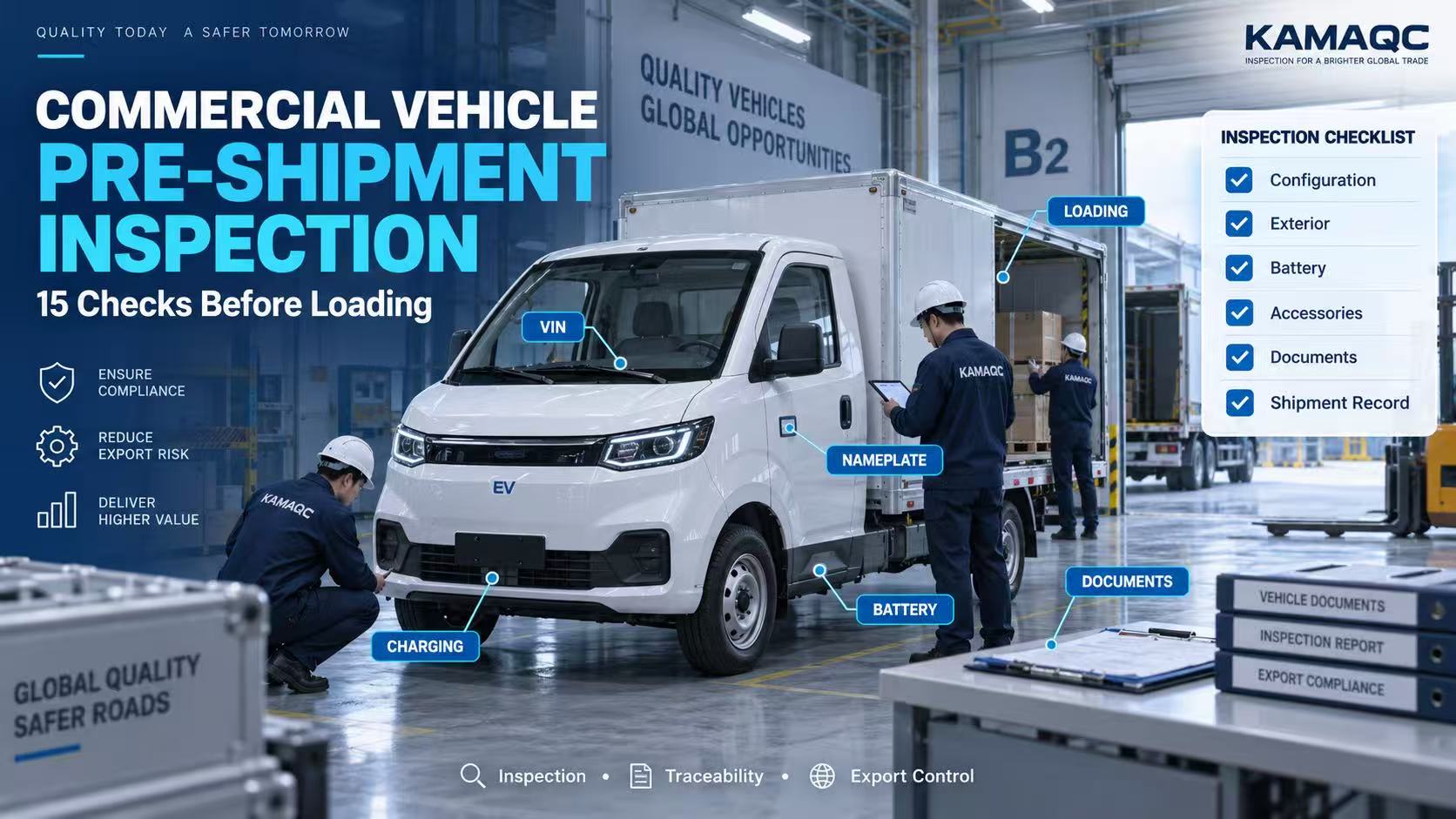
Pre-Shipment Inspection for Electric Commercial Vehicles: What KAMA QC Team Checks Before Loading
Why Pre-Shipment Inspection Matters More for Electric Commercial Vehicles
For importers, distributors and fleet buyers sourcing commercial vehicles from China, pre-shipment inspection (PSI) is one of the most practical steps to protect the order. With electric commercial vehicles, the inspection is even more important than with traditional fuel vehicles. The reasons are straightforward: high-voltage systems are sensitive to long-distance shipping conditions, configuration mismatches are harder to detect once the unit is at the destination port, and any battery, charging or BMS issue caught after arrival is significantly more expensive to resolve.
At KAMA, pre-shipment inspection is handled by the export QC team as a fixed step in the order workflow, not as an optional service. The objective is simple — every vehicle that leaves the factory should match what was agreed in the contract, be ready for use after destination handover, and be properly protected for ocean shipping. This article explains what the KAMA QC team actually checks and why each step matters for the buyer.
Stage 1 — Identity and Configuration Verification
Before any technical inspection begins, the QC team confirms that the physical vehicle matches the order. This includes:
VIN (Vehicle Identification Number) reading and cross-check with the proforma invoice and packing list
Model code, body colour, drive configuration (LHD), and seating layout where applicable
Optional configuration items confirmed item by item — for example, fast charging port, refrigeration unit, dump bed mechanism, double cabin, A/C type
Tyre brand and size against specification
Battery capacity tag and electric motor rating against datasheet
Configuration mismatches are the most common source of post-delivery disputes. Catching them before container loading takes minutes; resolving them after arrival at a foreign port can take weeks.
Stage 2 — Body and Exterior Inspection
The exterior check is visual and structured. The QC technician walks the vehicle in a fixed sequence to make sure no panel is missed.
Paint quality, panel alignment, door gaps and bumper fitment
Glass condition — windshield, side windows, rear window — checked for cracks, chips or scratches
All lights tested — headlights, indicators, brake lights, reverse lights, fog lights, cabin lights
Mirrors, wipers, washer system function
Door locks, central locking, window regulators
Cargo body or van body (where applicable) — internal lining, floor, tie-down points, rear door seals
Underbody check for transit damage, fluid leaks or loose components
Each finding is photographed. If anything is below standard, the vehicle is held back from loading until the issue is corrected.
Stage 3 — Battery and Electrical System Check
This is the stage that matters most for electric commercial vehicles. The KAMA QC team follows a standard electrical inspection protocol:
Battery state of charge (SOC) recorded — typically 30 to 50 percent for shipping, in line with safe transport guidance for lithium battery vehicles
Pack voltage verified against expected value at the recorded SOC
BMS function checked through the diagnostic interface — no fault codes, no cell imbalance warnings
Charging ports tested — both AC slow charge and DC fast charge where fitted, with verification that the locking pin and signal contacts work correctly
Insulation resistance check between high-voltage system and chassis
12V auxiliary battery voltage confirmed
All electrical accessories tested — power windows, central locking, audio, instrument cluster, reverse camera
Any high-voltage anomaly stops the loading sequence immediately and triggers a technical review with the production team.https://unece.org/transport/dangerous-goods
Stage 4 — Cabin and Driver Interface Check
A working cabin is part of vehicle readiness. The QC team confirms:
Dashboard powers up correctly, all warning lamps perform their start-up self-check, then clear
Instrument cluster shows correct units (km/h, °C) for the destination market
Air-conditioning produces cold air at the correct temperature within a reasonable time
Steering wheel controls, indicator stalks, wiper stalks and gear selector function correctly
Driver seat adjustment, seat belts, sun visors and interior trim are intact
Owner's manual, service booklet and tool kit are placed inside the vehicle
Stage 5 — Functional Driving Test
Every vehicle is moved under its own power before loading. The QC technician performs a short controlled drive on the factory test area to confirm:
Smooth start, acceleration response, and regenerative braking behaviour
Brake performance — service brake and parking brake
Steering response, alignment and absence of pulling
Suspension behaviour — no abnormal noise, no excessive movement
Reverse gear and reverse camera function
Mode selection — economy, normal, sport, or any drive mode included in the model
For specialised configurations such as refrigerated vans, dump trucks or minibuses, additional functional tests are added — refrigeration cool-down test, hydraulic tipping test, passenger door operation, and so on.
Stage 6 — Loading and Container Inspection
When the vehicle passes all earlier stages, it moves to the loading area. The QC team supervises:
Container condition check — no holes, no excessive rust, clean floor, working doors
Wheel chocks and lashing straps placed at the correct anchor points
Vehicle drive-on or lift-on procedure to avoid panel contact with the container walls
Wooden dunnage or rubber pads placed under tyres and at lashing contact points
Final position photographed before container doors are closed
Container seal number recorded and shared with the buyer
For multi-vehicle loading, the QC team also verifies the loading sequence so vehicles are not damaged during unloading at the destination port.
Reporting to the Buyer
After inspection and loading, KAMA QC prepares a structured report for the buyer. The report typically includes:
VIN list and configuration confirmation
Inspection photos covering exterior, interior, battery readings and loading
Short video clips of functional tests where requested
Container number, seal number and shipping marks
Any deviation noted during inspection and how it was resolved
Importers can use this report directly for their own internal records, for customer handover documentation, or for insurance purposes.
What This Means for Importers, Distributors and Fleet Buyers
Pre-shipment inspection is not a marketing claim. It is a fixed working process that reduces risk for both sides of the transaction. For buyers, it means the unit that arrives at the destination port is the unit that was ordered, in the condition expected, ready for commercial use after standard import procedures.
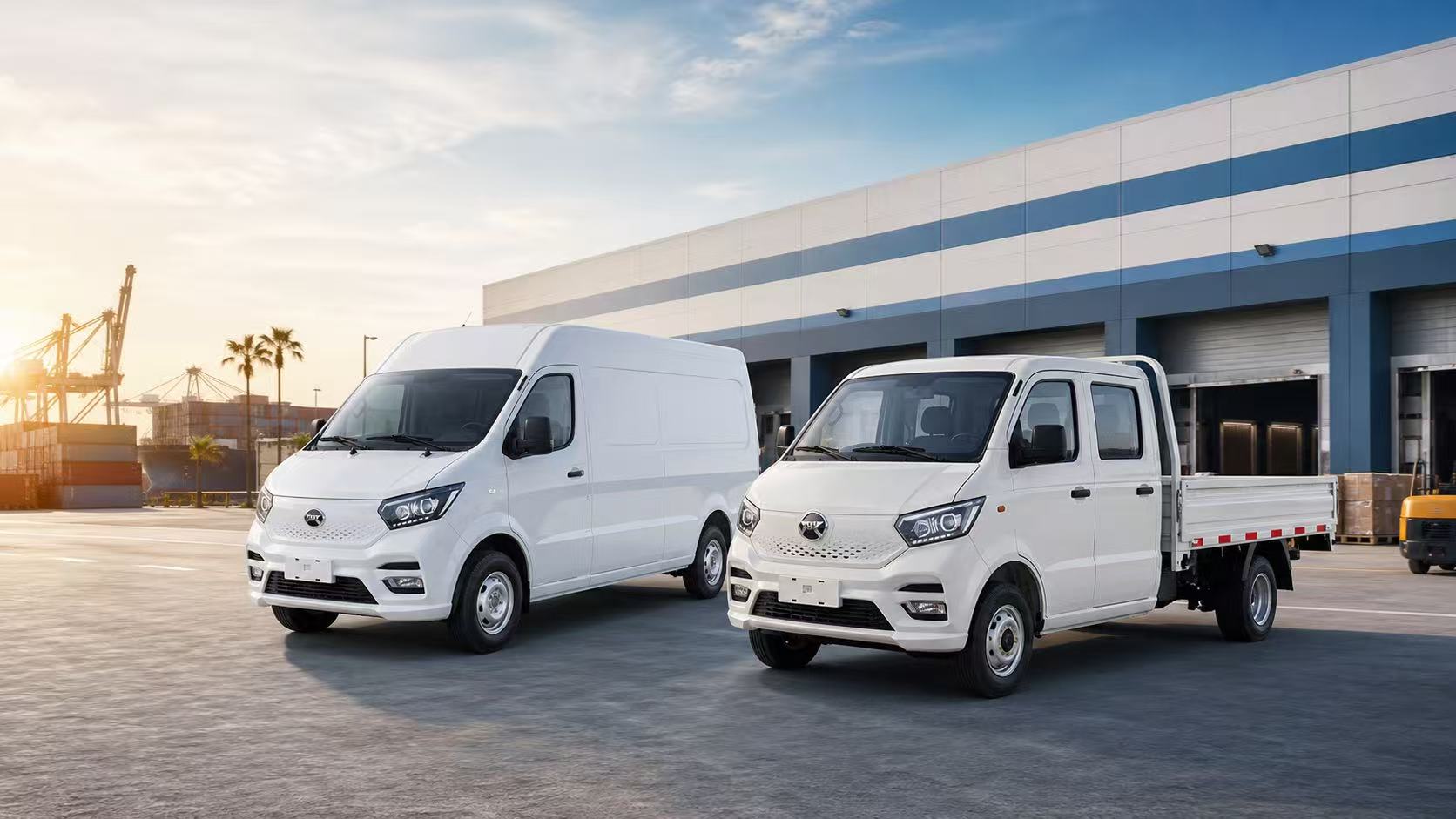
KAMA QC supports buyers across electric mini trucks, light duty trucks, electric vans and CKD/SKD shipments. For first-time buyers, the team can also walk through the inspection report format before order confirmation so the documentation expectation is clear from the start. To request a quotation, ask about a current order, or discuss an upcoming inspection, contact the KAMA export team directly.