Commercial Vehicle Container Loading Plan Before Booking
Commercial Vehicle Container Loading Plan: What Importers Should Confirm Before Booking
For commercial vehicle importers, shipping is not only about finding the lowest ocean freight. Before booking a vessel, buyers should confirm the vehicle loading plan, dimensions, loading quantity, accessories, documents and inspection records.
A clear container loading plan can help reduce shipment delays, avoid loading disputes and make the export process more predictable. This is especially important for electric mini trucks, cargo vans, light trucks, refrigerated vehicles and special-purpose commercial vehicles.
For importers, distributors and fleet buyers, the best time to check the loading plan is before booking, not after the vessel schedule is confirmed.
Why Container Loading Planning Matters
Commercial vehicles are larger and more complex than ordinary goods. Different models may have different length, width, height, wheelbase, ground clearance, mirror width, cargo body size and battery location.
If the vehicle dimensions are not confirmed before booking, the buyer may face problems during loading. For example, a vehicle may not fit the planned container, or the loading quantity may be lower than expected.
A good loading plan can help buyers estimate shipping cost, choose a suitable transport mode and prepare documents more accurately.
40HQ, 20GP or Ro-Ro: Which Shipping Mode Is Suitable?
Different shipping modes are suitable for different vehicle types and order quantities.
A 40HQ container is commonly used for compact electric mini trucks, small cargo trucks and some vans when the vehicle size allows container loading. It may help protect the vehicle during sea transport and support combined shipment of vehicles and accessories.
A 20GP container may be suitable for smaller shipments, spare parts, accessories or some compact vehicle models, depending on dimensions and loading method.
Ro-Ro shipping may be more suitable for larger trucks, vehicles that cannot fit into containers, or orders where drive-on/drive-off shipment is available and cost-effective.
The final shipping mode should depend on vehicle size, port availability, freight cost, shipping schedule, destination country and loading feasibility.
What Importers Should Confirm Before Booking
Before booking a shipment, importers should confirm several important points with the supplier and freight forwarder.
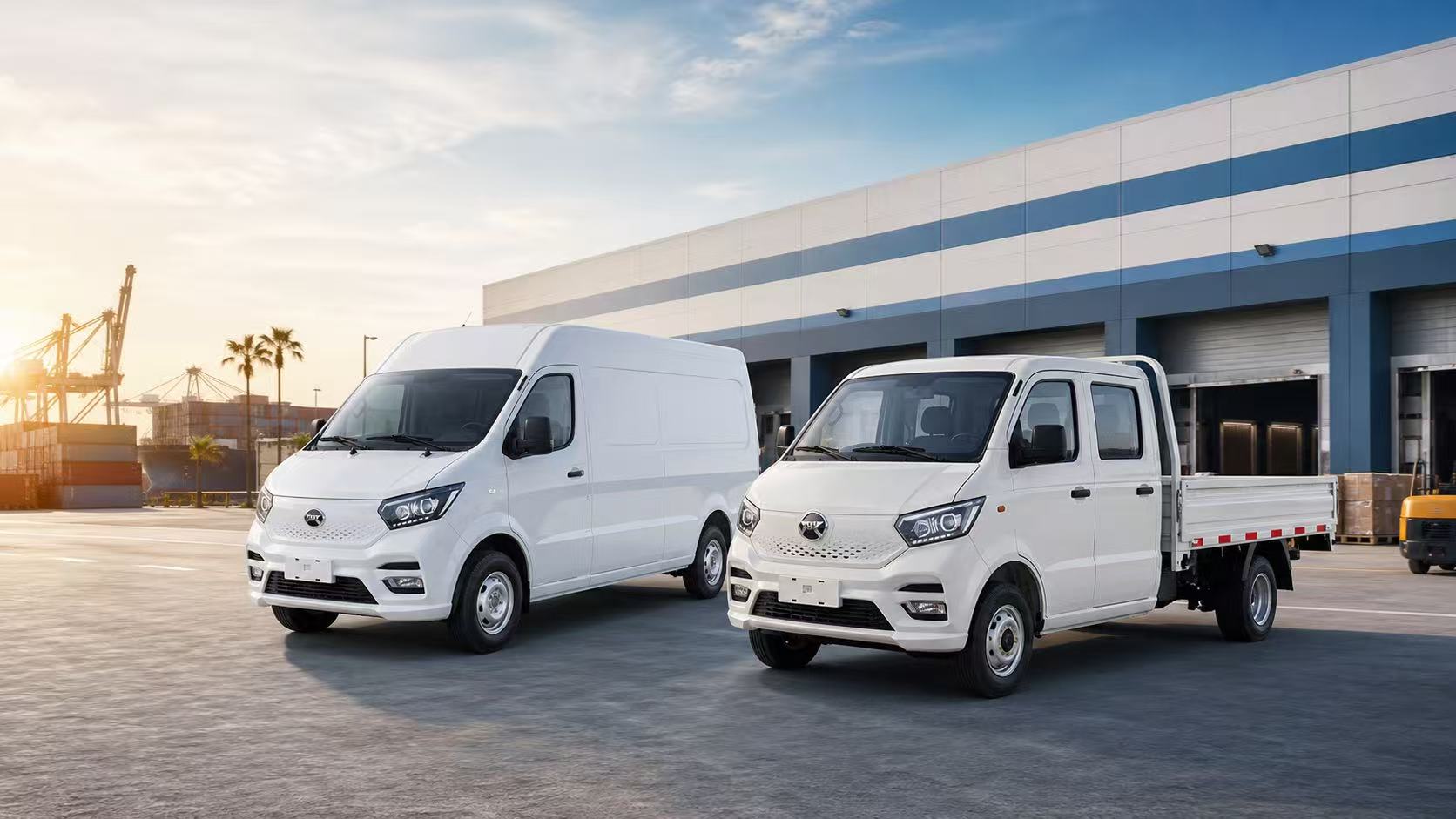
First, confirm the exact vehicle model and configuration. A chassis truck, box truck, refrigerated truck and passenger van may have different loading requirements even if they belong to the same product family.
Second, confirm the vehicle dimensions. Buyers should check overall length, width, height and whether mirrors, roof parts, cargo body or optional equipment affect container loading.
Third, confirm loading quantity per container. Importers should not assume that one container can always load the same number of vehicles. The loading quantity depends on vehicle size, loading method, safety space and container type.
Fourth, confirm whether the vehicle needs partial disassembly before loading. In some cases, mirrors, bumpers, wheels or other parts may need special handling, subject to model and loading plan.
Fifth, confirm whether spare parts, chargers, tools or accessories will be shipped together with the vehicles. These items should be listed clearly and packed properly.
Sixth, confirm the expected shipping port and destination port. Port selection can affect inland transport cost, vessel schedule, container availability and documentation process.
Loading Inspection Checklist
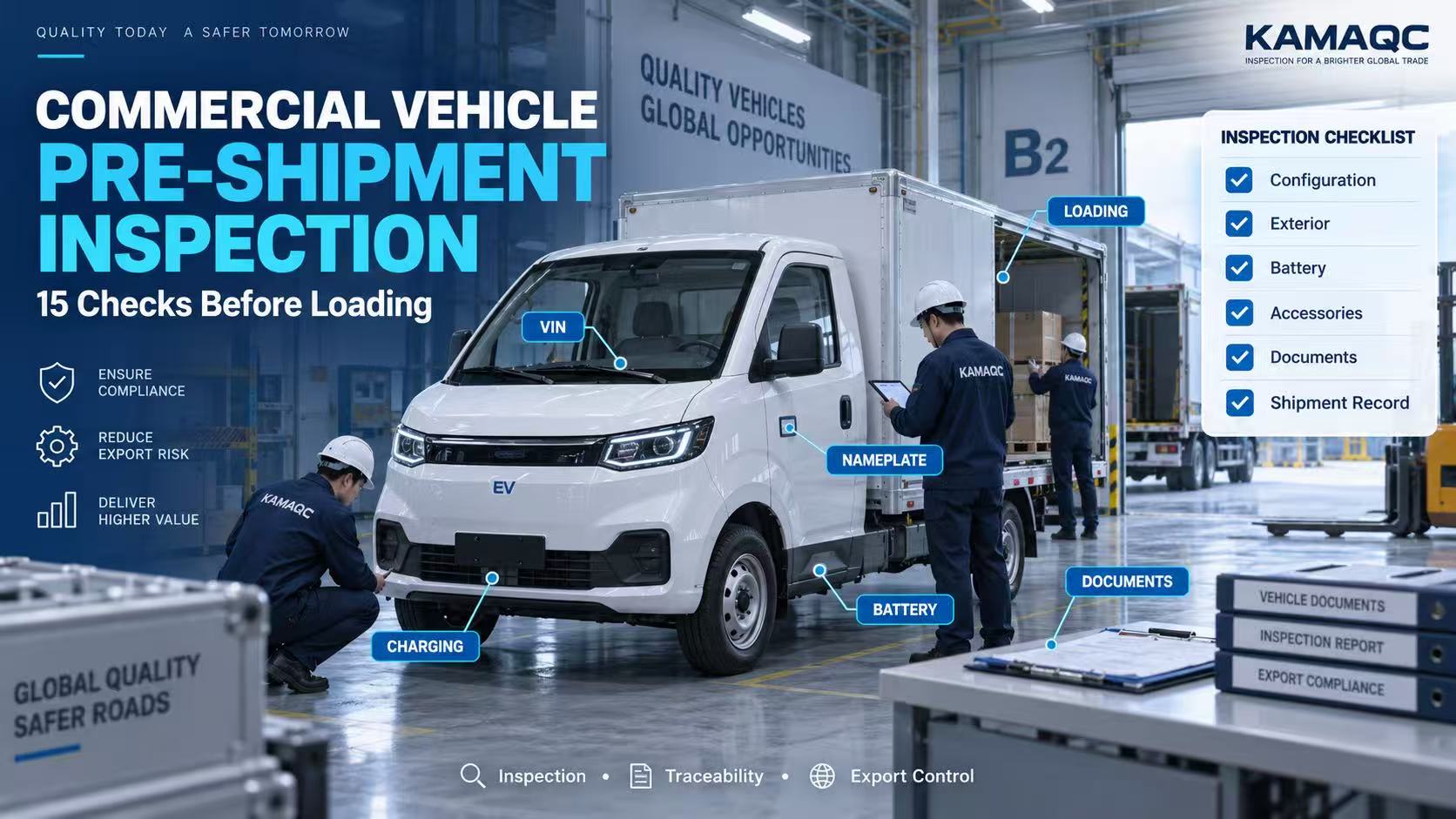
Before vehicles are loaded, importers should request basic inspection and photo records.
A practical loading inspection checklist may include:
vehicle exterior photos
interior photos
VIN plate photo
nameplate photo
dashboard photo
mileage record
battery SOC record for electric vehicles
charging port photo for EV models
cargo body or seat layout photo
accessories and spare parts photos
container number
seal number
loading photos
final container closing photo
These records help connect each vehicle with its VIN and shipment file. For distributors and fleet buyers, this is useful for customer delivery and after-sales management after arrival.
Special Notes for Electric Commercial Vehicles
Electric commercial vehicles may require additional checking before shipment.
The buyer should confirm battery state of charge, charging port type, charging accessories and whether the vehicle can power on normally before loading.
If chargers, charging cables or EV-related accessories are shipped together, they should be packed and listed clearly. If battery-related documents are required by the shipping line or freight forwarder, the exporter and logistics team should confirm them before booking.
Different shipping lines may have different requirements for electric vehicles and battery information. Importers should not assume that all routes and carriers use exactly the same process.
Spare Parts and Accessories During Loading
Spare parts and accessories should not be treated casually during vehicle shipment.
If spare parts are included in the order, the buyer should confirm the packing method, parts list and whether the items are placed inside the vehicle or packed separately.
Common items may include chargers, tools, mirrors, bulbs, filters, brake parts, wipers, small electrical parts or other service parts according to the confirmed order.
The packing list should match the actual shipment. Clear photos of spare parts and accessories can reduce disputes after arrival.
Common Loading Risks Importers Should Avoid
Many shipment problems can be reduced if importers confirm details before booking.
Common risks include:
vehicle size does not match the planned container
loading quantity is overestimated
accessories are missing or not listed
VIN records are incomplete
container number and seal number are not photographed
battery SOC is not recorded for EV models
spare parts are placed in the vehicle without clear list
shipping documents do not match the actual vehicle configuration
destination port requirements are not checked before shipment
A structured loading plan can help avoid these issues.
How KAMA QC Supports Vehicle Export Loading
KAMA QC focuses on practical export support for overseas buyers, importers, distributors and fleet customers. For commercial vehicle export orders, KAMA QC can support quotation communication, configuration checking, stock confirmation, VIN checking, pre-shipment inspection communication, export document preparation and shipment coordination according to the confirmed order plan.
For container loading preparation, buyers can share the vehicle model, quantity, destination port, preferred shipping mode and required accessories. KAMA QC can help check what should be confirmed before booking and what loading information should be recorded before shipment.
Final loading quantity, shipment mode, freight cost, document set and shipping schedule should be confirmed according to the exact vehicle model, order quantity, port conditions, freight forwarder feedback and approved order terms.
Recommended Inquiry Information
To prepare a more accurate loading and shipping plan, buyers are suggested to provide the following information:
Destination country
Destination port
Target vehicle model
Quantity
Vehicle configuration
Cargo body type
Left-hand drive or right-hand drive requirement
Preferred shipping mode: container or Ro-Ro
Required spare parts or accessories
Charging accessories for EV models
Expected shipment time
Company type: distributor, importer, fleet buyer or end user
With this information, KAMA QC can help check the suitable quotation direction, export preparation scope and shipment coordination plan.
Build a Better Commercial Vehicle Shipping Plan with KAMA QC
If you are planning to import electric mini trucks, cargo vans, light trucks or other commercial vehicles from China, do not only compare vehicle price. Loading plan, container quantity, VIN records, accessories, shipping mode and document consistency are also important.
Please share your destination country, destination port, vehicle type, quantity and preferred shipping mode. KAMA QC will help check the suitable export preparation and loading confirmation plan for your order, subject to final confirmation.
FAQ
1. Why should importers confirm the loading plan before booking?
Importers should confirm the loading plan before booking because vehicle dimensions, container type and loading quantity can affect freight cost, shipping schedule and export preparation. Confirming these details early can reduce delays and disputes.
2. How many commercial vehicles can be loaded in one 40HQ container?
The loading quantity depends on the exact vehicle model, dimensions, loading method and container type. Importers should confirm the loading plan with the supplier and freight forwarder before booking.
3. What photos should be kept during vehicle loading?
Useful loading photos include vehicle exterior, interior, VIN plate, nameplate, dashboard, cargo body, accessories, container number, seal number, loading process and final container closing photo.
4. What should be checked for electric vehicles before loading?
For electric vehicles, buyers should check battery state of charge, charging port, charging accessories, dashboard status, VIN information and whether any battery-related shipping documents are required by the carrier.
5. Can KAMA QC help with loading and shipment coordination?
KAMA QC can support loading preparation, VIN checking, pre-shipment inspection communication, export document preparation and shipment coordination according to the confirmed vehicle model, order quantity and approved order terms.