Why Fuel Cost Pressure Is Creating New Demand for Left-Hand Drive Electric Commercial Vehicles
Why Fuel Cost Pressure Is Creating New Demand for Left-Hand Drive Electric Commercial Vehicles
For many commercial vehicle buyers in Africa, the Middle East, Central Asia and South America, fuel cost is no longer only an operating expense. It has become a direct factor affecting fleet profitability, delivery efficiency and long-term business planning.
As fuel prices fluctuate and some markets begin to encourage electric mobility, more importers, logistics companies, government projects and business fleets are paying attention to left-hand drive electric commercial vehicles. For buyers who need practical working vehicles, electric cargo vans, EV mini trucks and electric light-duty trucks are becoming a more realistic option than before.
Fuel Cost Is Changing Commercial Vehicle Purchasing Decisions
Commercial vehicles are different from private passenger cars. They are used every day for delivery, distribution, city logistics, small business operation, passenger transport and project support. This means that daily operating cost matters.
For a traditional fuel vehicle, the buyer must consider:
Fuel cost
Maintenance cost
Engine service cost
Downtime caused by mechanical repairs
Long-term spare parts consumption
Fleet operating stability
Electric commercial vehicles offer another path. With battery-powered driving systems, fewer engine-related components and lower daily energy cost in suitable markets, EV commercial vehicles can help reduce the total cost of operation for short-distance and medium-distance use.
This is especially important for urban delivery fleets, warehouse-to-city transport, local distribution companies, airport service vehicles, municipal projects and small business owners.
Why Left-Hand Drive Markets Are Important
Many high-potential export markets use left-hand drive vehicles. These include countries in Africa, the Middle East, Central Asia and Latin America. For these markets, buyers are not only searching for electric vehicles. They are specifically looking for left-hand drive electric vans, left-hand drive EV mini trucks and left-hand drive electric light-duty trucks that can match local road rules and commercial usage habits.
This creates a clear opportunity for export suppliers that can provide:
Left-hand drive vehicle layout
Practical cargo space
Reliable battery options
Suitable charging configuration
Spare parts support
Export documentation support
Flexible vehicle solutions for different applications
For many importers, the key question is not whether electric vehicles are popular. The key question is whether the vehicle can actually support daily business operation in their country.
Africa Is Becoming a Key EV Growth Market
In recent years, African countries have started to pay more attention to electric mobility. Ethiopia is one of the most visible examples. After limiting imports of gasoline and diesel vehicles, the country has seen rapid growth in electric vehicle adoption.
This market change shows an important trend: when fuel import pressure, urban transport demand and EV policy move together, electric vehicles can become more attractive for both government and private buyers.
For commercial vehicle exporters, this does not mean every market is ready for large-scale EV adoption immediately. Charging infrastructure, after-sales service, spare parts availability and local certification still need to be considered. However, it does mean that buyers are becoming more open to electric commercial vehicle solutions, especially for city-based operation.
Which Electric Commercial Vehicles Are Suitable for Export Markets?
For many emerging markets, the most practical EV products are not luxury vehicles. Buyers often need simple, durable and commercially useful vehicles.
Electric Cargo Vans
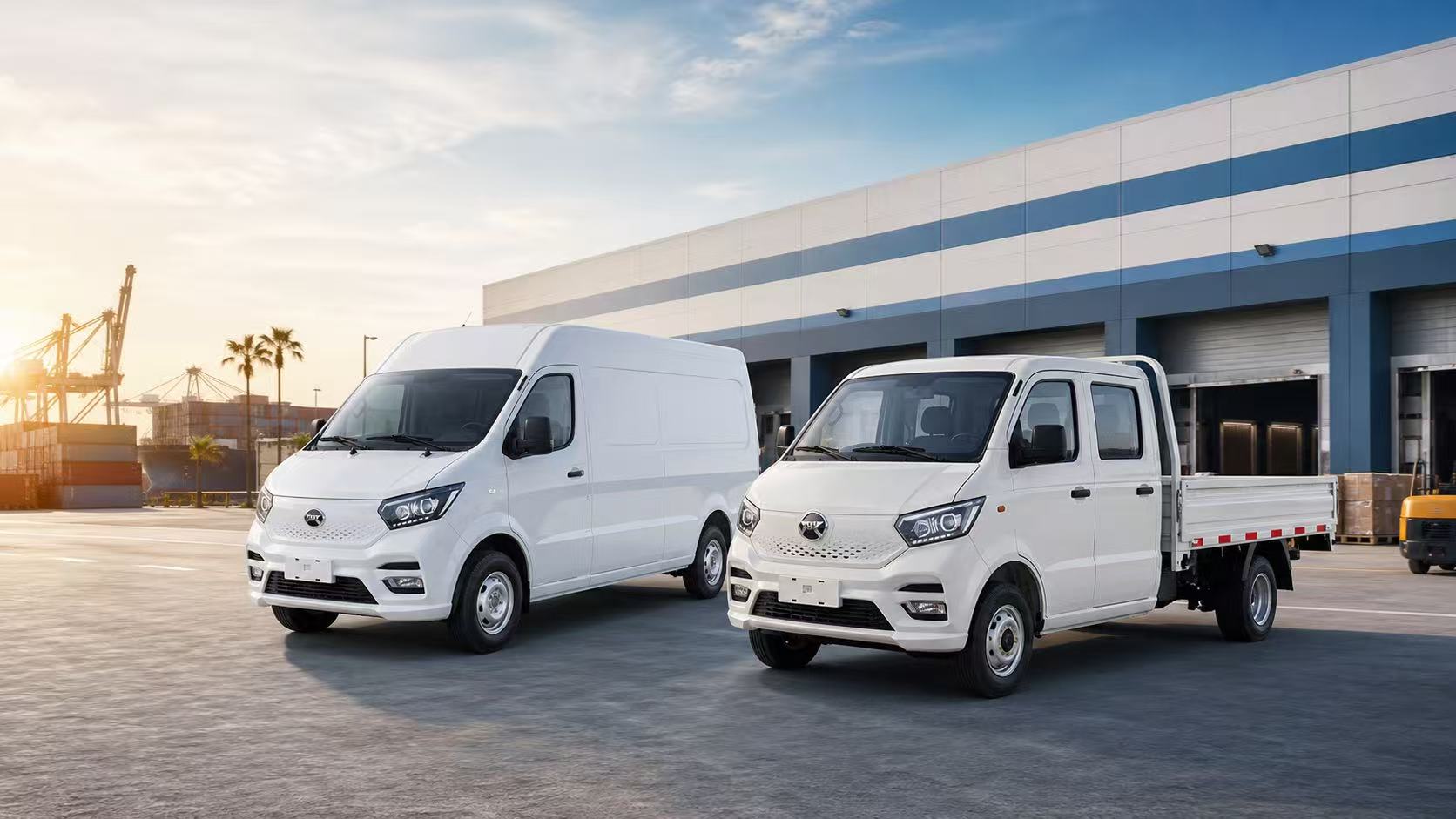
Electric cargo vans are suitable for city delivery, e-commerce logistics, supermarket distribution, spare parts delivery and small business transport. Compared with traditional fuel vans, electric cargo vans can provide quiet operation, lower daily energy cost and enough cargo volume for urban logistics.
For importers, important selection factors include cargo volume, battery capacity, driving range, charging port type, left-hand drive availability and spare parts support.
EV Mini Trucks
EV mini trucks are widely used for small cargo delivery, market distribution, farm-to-city transport and local business operation. Their compact size makes them suitable for narrow roads, city streets and short-distance transport routes.
For many fleet buyers, EV mini trucks are attractive because they combine practical loading capacity with lower operating cost.
Electric Light-Duty Trucks
Electric light-duty trucks are suitable for heavier urban logistics, municipal projects, warehouse distribution and commercial fleet operation. Compared with smaller EV mini trucks, light-duty EV trucks can support larger cargo bodies and more professional transport tasks.
For buyers who need fleet replacement or project procurement, electric light-duty trucks can be a strong option when route distance and charging conditions are suitable.
What Buyers Should Check Before Importing EV Commercial Vehicles
Before choosing a left-hand drive electric commercial vehicle, buyers should evaluate the vehicle based on actual operating conditions.
Important questions include:
What is the daily driving distance?
What cargo weight or passenger capacity is required?
Is the vehicle used mainly in the city or on longer routes?
What charging standard is required in the destination country?
Are spare parts and technical support available?
Is the vehicle needed as CBU, SKD or CKD?
Are local certification or registration documents required?
A good EV commercial vehicle solution should not only look attractive in specifications. It should match the buyer’s real business scenario.
KAMA Export Supply Center Supports LHD Electric Commercial Vehicle Buyers
KAMA Export Supply Center focuses on practical commercial vehicle solutions for overseas markets. For buyers looking for left-hand drive electric commercial vehicles, we can support different product categories including electric cargo vans, EV mini trucks, electric mini buses and electric light-duty trucks.
Our team can help buyers compare vehicle types based on country, usage, quantity, charging requirements and delivery schedule. Whether the project is for urban logistics, small business delivery, government procurement, fleet replacement or distributor stock planning, we can recommend suitable vehicle solutions.
Conclusion
Fuel cost pressure, policy changes and urban logistics demand are pushing more buyers to consider electric commercial vehicles. For left-hand drive export markets, electric cargo vans, EV mini trucks and electric light-duty trucks are becoming more important choices.
For importers and fleet buyers, the best decision is not simply choosing the lowest price. The better approach is to choose a vehicle that matches local road rules, daily driving distance, charging conditions, cargo needs and after-sales support.
If you are looking for left-hand drive electric commercial vehicles for your market, contact KAMA Export Supply Center and tell us your country, vehicle application, quantity and preferred vehicle type. Our team will help you find a suitable solution for your business.